
How to choose a dog bed: size, shape, and cleaning
Observe how your dog sleeps, record the occupied dimensions, and compare access, washing, and useful space before choosing a bed.
In this article7 topics
The reader can observe three rest sessions, complete a measurement sheet, eliminate incompatible options, and evaluate the selected bed for seven days.
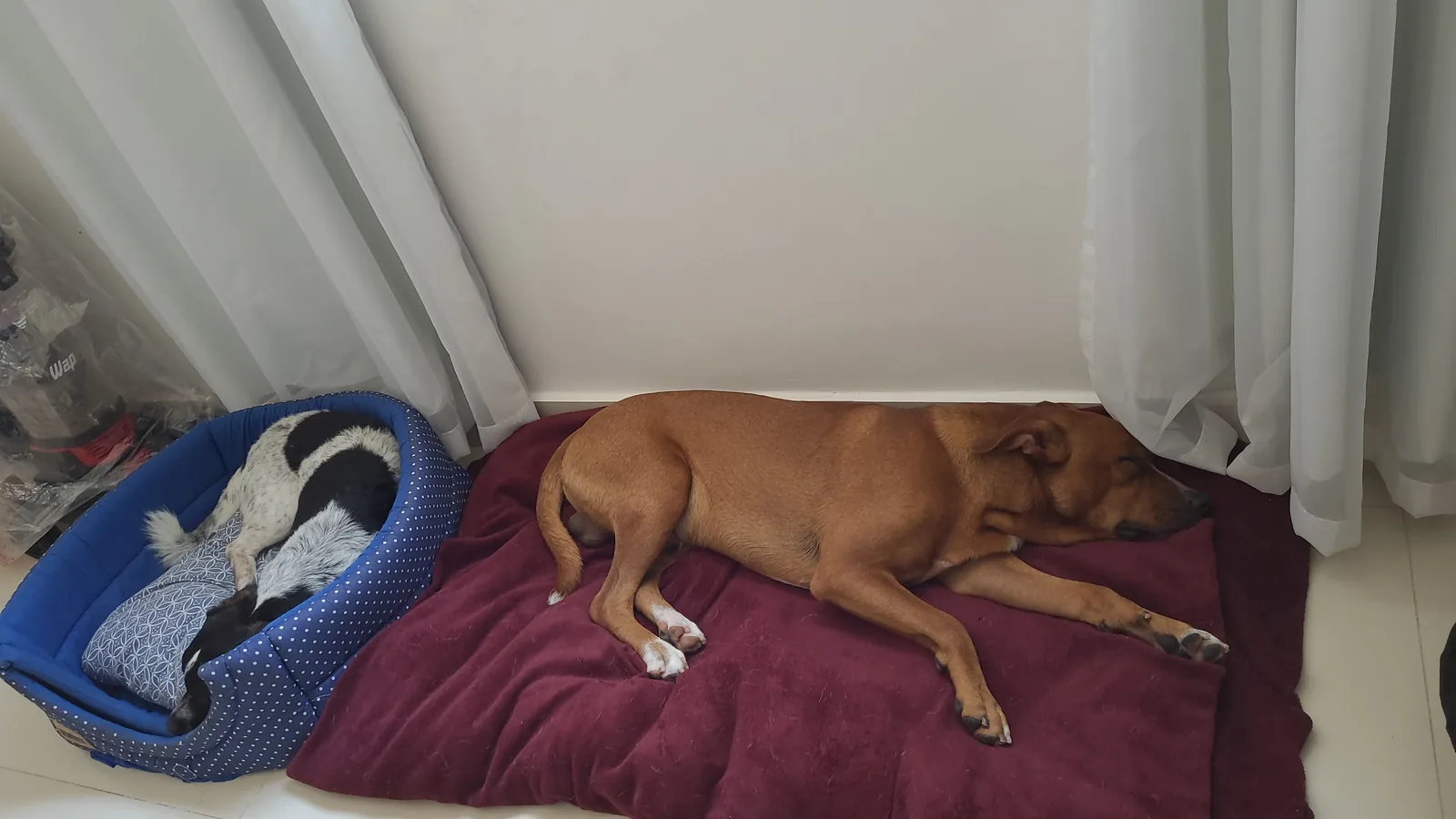
A beautiful bed may be too small when the dog stretches, difficult to wash, or too high for reduced mobility. Observe the dog before choosing a shape or finish.
This content is informational and does not replace veterinary advice.
The RSPCA dog-bed guidance describes the need for a comfortable, clean resting area. Its broader dog environment guidance helps place the bed within the full home environment.
Observe three rest sessions
For each session, record:
- position: curled, on the side, stretched, or changing often;
- maximum length and width occupied;
- surface chosen and room temperature;
- ease of lying down and standing up;
- whether edges are used as support or avoided.
Do not measure only the dog’s standing body length. The useful inner area must accommodate the real sleep position.
Match observation to features
| Observation | Feature to compare | Verify |
|---|---|---|
| sleeps stretched | open rectangular area | inner length and width |
| curls and leans | supportive edge | useful area inside the edge |
| seeks a cool floor | open, breathable design | material and ventilation |
| changes position often | unobstructed area | edges do not reduce movement |
| has reduced mobility | low, stable access | entry height and non-slip base |
The AAHA lifestyle and safety assessment discusses environmental adaptations, while its senior-care pain management guidance includes supportive environmental considerations. Pain and mobility changes require professional assessment.
Maintenance test before purchase
- Identify every removable layer and the washing instructions.
- Confirm whether the filling can dry completely in your climate and routine.
- Inspect seams, zippers, non-slip material, and exposed foam.
- Check the actual inner dimensions rather than the seller’s size label.
- Confirm the return policy before the dog uses the product.
No bed should be treated as indestructible. If the dog tears and swallows fabric or filling, remove access and seek appropriate guidance.
Seven-day adaptation check
- keep the bed in a predictable, quiet location;
- allow voluntary investigation without forcing the dog onto it;
- record use, position, heat, cleaning, and access;
- compare the new bed with the previous resting surface;
- reassess if the dog avoids it or struggles to get up.
Decision before paying
- Is the function already covered by something intact at home?
- Have useful dimensions and the exact variant been confirmed?
- Do purchase, shipping, and replacement costs fit without displacing essentials?
- Can purchases that depend on observation wait?
What research confirms and what remains unknown
For any removable-cover bed, separate seller specifications from measurements of the unit received. Ask for inner dimensions, entry height, the exact variant, and its washing label. An overall length does not establish useful sleeping space. Without observing a unit, we cannot state actual drying time, stability, or durability. Archive photos do not identify an advertised SKU or prove its use. This international guide compares category criteria; it does not assume a Brazilian offer is available locally.
Eliminate options without verifiable inner dimensions or washing instructions. An intact blanket or simple mat may be suitable while you observe. The seven-day workflow is a proposed collection protocol, not a test performed by Zelavi.
Sources
Editorial transparencyHow this content was produced
The guide combines RSPCA and AAHA guidance with an editorial matrix for observation, useful measurements, maintenance, and adaptation.
Evidence basis: editorial synthesis of disclosed sources
Original contribution: A three-session observation sheet, useful-dimension calculation, sleep-position matrix, maintenance test, and seven-day adaptation protocol.
Expected outcome: The reader can observe three rest sessions, complete a measurement sheet, eliminate incompatible options, and evaluate the selected bed for seven days.
Limitations: Zelavi did not purchase or test the beds or brands; the matrix does not assess durability and does not replace veterinary advice for pain or reduced mobility.
Internal editorial review: Codex (AI) — automated check; no human review in this update, 2026-09-06. This review is not a veterinary review.
Content limitation: there was no veterinary review. The article is limited to routine organization and does not provide diagnosis, prescriptions, dosages, or clinical protocols.
AI tools supported research, structure, and drafting. The project owner selects the sources, defines the limits, and decides what is published. Learn more on the author page.
Keep exploring
Related content
New cat starter kit: essential items
Prepare separate resources for feeding, elimination, rest, scratching, and transport before the cat arrives.
Read article
New dog starter kit: what to buy first
Build an arrival kit by priority, measure before buying, and postpone items that depend on the dog's behavior.
Read article
10 dog profiles to research before choosing
Use a routine matrix to research ten dog profiles without assuming that breed or size guarantees adaptation to a home.
Read article